
TimeXtender Classic
SQL-Based Data Warehousing, Built for Your Own Environment
TimeXtender Classic is the low-code data warehousing solution for teams that run on SQL Server or Azure SQL Database. TimeXtender Classic runs entirely inside your own IT environment, with no cloud dependency and no external connectivity required.
Runs fully inside your IT environment: On-prem SQL Server or Azure SQL Database
No internet connectivity required: Including air-gapped environments
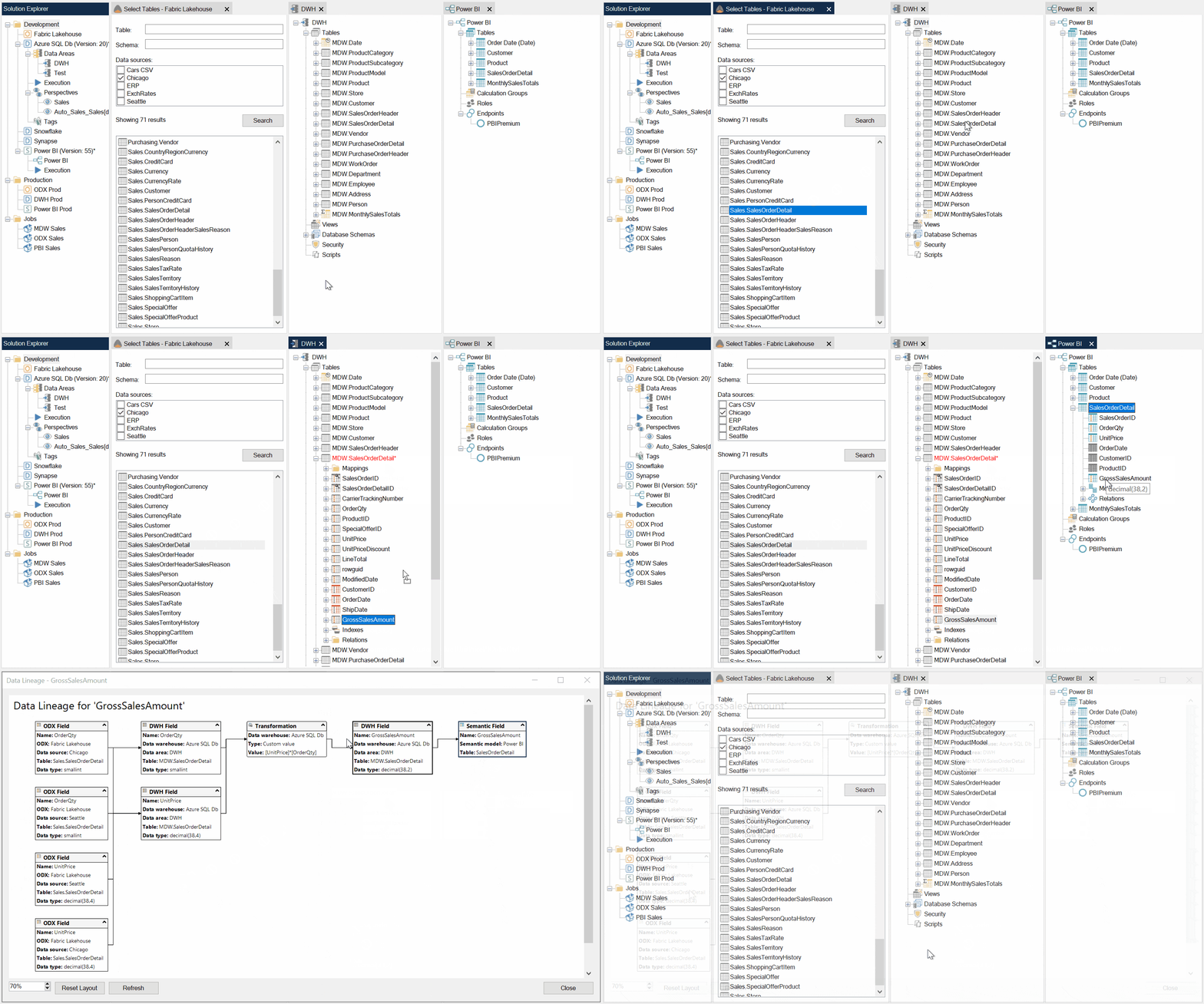
Auto-generated documentation & lineage: Built in, not bolted on
What is TimeXtender Classic?
Most data integration tools assume you want to move to the cloud. TimeXtender Classic is built for teams that don't.
Classic uses a metadata-driven, low-code interface to build and maintain SQL data pipelines. Your team defines ingestion and transformation logic in the application, and Classic automatically generates and maintains the SQL objects your target database needs (tables, views, stored procedures) as requirements evolve. The result is a governed, auditable data environment that your team controls from end to end, without hand-writing and maintaining thousands of lines of SQL.
Three-Layer Architecture
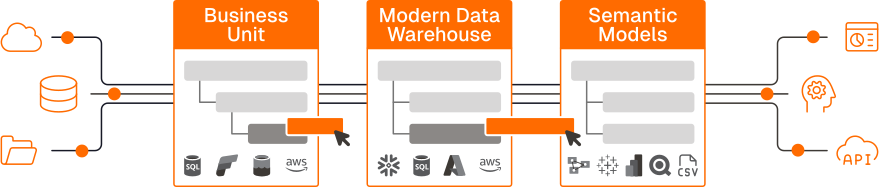
Classic organizes your SQL-based solution into three distinct layers. Each layer has a clear responsibility, so your team can ingest data, integrate it, and deliver curated models without mixing concerns across the pipeline.
Business Unit
Ingestfrom any data source. Preserve everything.
The Business Unit layer is your centralized collection point for raw data across the organization.
Modern Data Warehouse
Transform and integrate through a low-code interface. Let Classic handle the SQL.
The Modern Data Warehouse layer is where disparate datasets are transformed and integrated into a coherent SQL model.
Semantic Models
Deliver governed, self-service models thatfeed every BI and AI tool your team uses.
The Semantic Layer is where your team creates purpose-built data models aligned to specific departments or business needs.
Key Capabilities
Classic is built around a set of capabilities that reduce the operational overhead of running a SQL-based data environment, and keep it reliable as it grows.
Metadata-driven automation
Define ingestion, relationships, and transformation logic through the low-code interface once. Classic generates and maintains the SQL implementation automatically (tables, views, stored procedures) so your team spends less time authoring, reviewing, and refactoring SQL as requirements change.
Pipeline integrity through managed dependencies
Classic maintains explicit relationships between data objects across the solution. When sources are added, transformations extended, or downstream models updated, the dependency structure stays visible and managed, preventing the fragile downstream breakage that makes SQLcentric environments difficult to evolve.
Smart orchestration for reliable recurring loads
Data loads are sequenced and executed based on the dependency graph defined in metadata, not manually maintained job ordering. As the solution grows, execution follows the order required to keep downstream tables and models consistent with upstream inputs, predictably and without intervention.
Automated documentation and lineage
Classic generates end-toend documentation and data lineage automatically as part of the solution. Your team gets full visibility into where data originates, how it is transformed, and how it reaches downstream models, without running a separate documentation project that falls out of date the moment something changes.
Is Classic right for you?
The decision between TimeXtender Classic and TimeXtender Data Integration comes down to two practical questions: where you need to run your data integration solution, and what you need to build on top of it.
Classic is likely the right fit if:
- Your target platform is SQL Server or Azure SQL Database
- You need the solution running inside your own IT environment
- Offline or air-gapped operation is a hard requirement
- You want to keep your data solution SQL-centric, without expanding to broader cloud storage patterns
Consider Data Integration if:
- You want a cloud-based instance and environment model
- You need to support modern cloud architectures, such as warehouses, data lakes, or lakehouses
- You need targets beyond SQL, such as Microsoft Fabric, Snowflake, or AWS
- You need platform capabilities like endpoints and APIs to integrate and operate workflows
Ready to see it in Action?
TimeXtender Classic gives your team a governed, low-code data warehousing solution that runs entirely inside your own environment, with no cloud dependency, no hand-written SQL maintenance, and full visibility from source to model.