13 min read
Timextender Alternatives: An Honest Comparison for Mid-Market Data Teams
 Timextender
:
Published
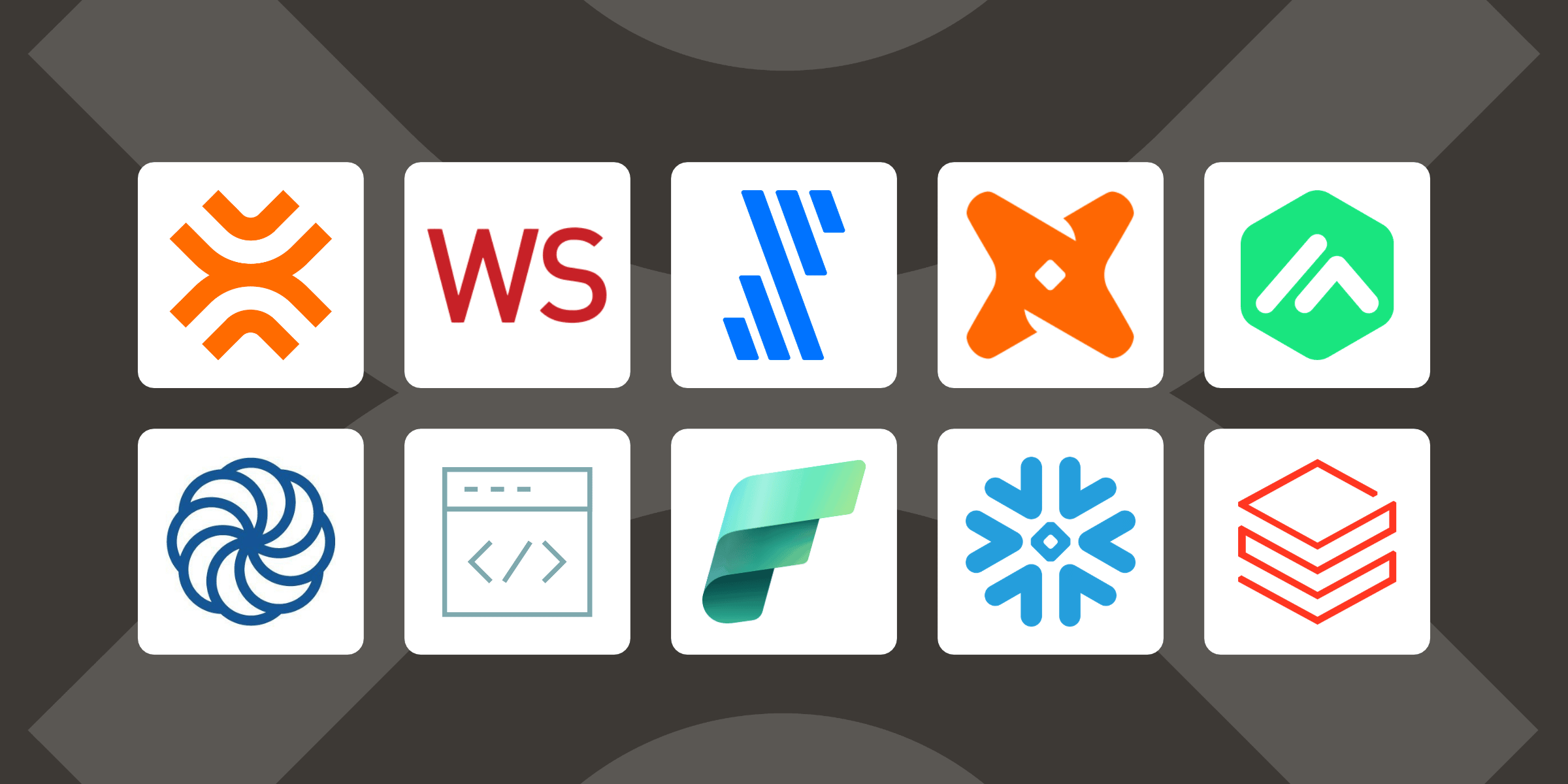
Table of Contents
Products and pricing in this market change often; we review this page every quarter.
The short answer. The alternatives most often compared with Timextender fall into two groups. The first is tools that cover part of the data lifecycle: WhereScape, Fivetran + dbt Labs, Matillion, Coalesce, or building it yourself with custom code. The second is platforms you build on: Microsoft Fabric, Snowflake and Databricks. Timextender is the control layer for AI-ready data. It is a data fabric platform that unifies data integration, data enrichment, data quality and orchestration on one metadata layer, and it runs on Fabric, Snowflake, Azure, SQL Server and AWS rather than replacing them.
If you are searching for Timextender alternatives, you are probably in one of two places. You may be evaluating Timextender and want to be sure you are not overlooking a better fit. Or you may already use Timextender and are reviewing your options as your architecture changes. This guide is written for both. It says plainly where each alternative fits, including when one is the better choice, and where Timextender takes a different approach.
Already a Timextender customer? Jump to your path forward
Two Kinds of Alternative
Most comparisons mix two different decisions. Choosing a tool for part of the job, such as ingestion, transformation or a warehouse build, is not the same as choosing the platform your data lives on. Timextender competes with the first group. With the second, it works alongside: your business logic lives in Timextender's metadata and deploys to the platform you choose.
How to Evaluate Any Alternative
Compare tools on the criteria that decide whether your data is trustworthy enough for AI, not only on whether it lands in a warehouse. These seven criteria cover the main questions.
| Criterion | Why it matters | Questions to ask any vendor | How Timextender handles it |
|---|---|---|---|
| Metadata-driven automation | Hand-built pipelines get harder to maintain as sources and models grow | Is logic stored as metadata or as hand-written code? What happens when a source schema changes? | Metadata drives ingestion, modelling, delivery and orchestration, and a source change is carried through the data flow in a few clicks |
| Deterministic code generation | Production code has to give the same result every time and be auditable | Is code generated by rules or by a probabilistic model? Who reviews it? | A rule-based engine generates code from metadata, optimised for the storage you choose |
| Governance and lineage | Auditors, regulators and AI users need to trace every number | Is lineage automatic and end to end, or limited to one tool? Is documentation generated? | Documentation and end-to-end lineage are generated automatically, every saved project is versioned so you can roll back, and you can keep separate development and test environments before production |
| Data quality | Reports and AI models are only as good as the data they are fed | Is data quality part of the pipeline or a separate product? Does it include profiling, rules and monitoring? | The Data Quality module adds automated profiling, rule-based validation and continuous monitoring |
| Portability and lock-in | Storage strategies change, and rebuilding is expensive | Can you move to another cloud or to on-premises without rewriting your logic? | Business logic is kept separate from storage, so the same solution deploys to Azure, Microsoft Fabric, SQL Server, Snowflake or AWS |
| Data handling | Sensitive data should stay under your control | Where is data processed? What does the vendor retain? | Timextender follows a Zero-Retention model: it does not retain customer data beyond what a capability you enable needs, and you can host modules in your own environment |
| AI readiness | AI tools need governed business definitions, not raw tables | How do AI tools reach your data? Is that access governed, audited and scoped? | The MCP Server connects AI clients and agents to governed semantic models with read-only query validation, API key authentication, audit logging and access scoped by business domain, and Xpilot Analytics answers plain-language questions from the same models |
A Note on AI Agents That Read and Write
Some tools are now judged mainly on whether AI agents can write data back to operational systems. For decision-grade answers, read-only, audited access to governed semantic models is a deliberate control, because every answer then comes from the same approved business definitions as your reports. Writing back to operational systems is a separate decision with its own risks. Before you enable it with any vendor, ask who approves each change, how it is logged, and how it is rolled back.
Tools That Do Part of the Job at a Glance
| Option | Type | What it covers | Where it runs | Pricing model |
|---|---|---|---|---|
| Timextender | One platform for data integration, enrichment, quality, and orchestration | Metadata-driven, rule-based code generation; lineage and documentation produced as you build | Cloud, hybrid, on-premises | Predictable subscription tiers |
| WhereScape | Warehouse build tool | Warehouse design, build and Data Vault automation | On-premises and cloud | Quote-based |
| Fivetran + dbt Labs | Ingestion plus transformation | Managed connectors; SQL models, tests and documentation | Managed service | Usage-based: monthly active rows plus transformation model runs |
| Matillion | Integration and transformation | Visual pipelines with AI agents (Maia) | Managed service, or a runner in your own cloud account | Annual credit packages |
| Coalesce | Transformation | Transformations built and run inside your cloud data platform | Snowflake, Databricks SQL, Fabric, BigQuery | Free tier, per-user plans, custom enterprise pricing |
| Building it yourself | Custom code | Whatever your team writes and maintains | Anywhere | Engineering time plus infrastructure |
Platforms You Build On at a Glance
| Option | Type | What it covers | Where it runs | Pricing model |
|---|---|---|---|---|
| Microsoft Fabric | Platform (Timextender runs on it) | OneLake storage, Spark and SQL workloads, Power BI | Microsoft cloud | Capacity units (F SKUs) |
| Snowflake | Platform (Timextender runs on it) | Elastic cloud data platform | AWS, Azure, Google Cloud | Consumption credits; storage charged separately |
| Databricks | Platform | Lakehouse for data engineering, analytics and machine learning | Major clouds | Databricks Units; classic compute infrastructure billed by your cloud provider |
The pattern: WhereScape automates the warehouse build. Fivetran + dbt Labs, Matillion and Coalesce each cover a stage of the pipeline. Fabric, Snowflake and Databricks provide the platform underneath. Timextender is built so a lean team can run the whole lifecycle from one metadata layer, so the numbers match, lineage is there when someone asks, and the logic stays portable.
Tools That Do Part of the Job
Each tool below is a credible product with real strengths. For each one, we set out what it does well, where it asks more of your team, and where Timextender takes a different approach.
WhereScape
WhereScape automates data warehouse projects from design to delivery. WhereScape 3D models and prototypes the warehouse, WhereScape RED builds and manages it by generating the SQL behind a drag-and-drop interface, and WhereScape Data Vault Express applies Data Vault 2.0 patterns. It runs on-premises and in the cloud.
Where it fits. Teams that think in warehouse models, and especially teams standardised on Data Vault, will find WhereScape a strong match. It removes a great deal of repetitive hand-coding from warehouse projects.
Where Timextender is different. Scope. WhereScape's strength is the warehouse build itself. Timextender treats the warehouse as one part of a wider job and brings data integration, enrichment, quality and orchestration into the same platform, driven by the same metadata. Enrichment is a good example: Timextender gives business-owned data, such as KPIs, targets and business context kept in spreadsheets, a governed home alongside your core systems, so departments stop arriving at the same meeting with different numbers. For a lean team, fewer seams between tools means fewer places for definitions to drift.
Fivetran + dbt Labs
Fivetran and dbt Labs completed their merger on 1 June 2026. Fivetran moves data from source systems through managed connectors; dbt transforms it with SQL models, tests and documentation.
Where it fits. If your team writes SQL confidently, values the dbt community and wants best-of-breed components, this pairing is hard to ignore. The managed connector library is a genuine strength.
Where Timextender is different. Even under one roof, this is a stack you assemble. Orchestration across systems, data quality, a governed semantic layer and lineage that spans every tool typically come from further tools or further configuration, and the team becomes its own systems integrator. Timextender replaces that stitching with one metadata-driven platform that connects to any data source, so lineage and documentation are by-products of building. Cost behaves differently too. Fivetran bills on monthly active rows, with a $5 base charge on each standard connection that uses between 1 and 1 million monthly active rows, and transformations are billed per successful model run above a monthly free allowance (Fivetran pricing, checked October 2026). That model suits some workloads and surprises others, so estimate it properly before you rely on it. For our view on the merger, read Integration Is Not Unification.
Matillion
Matillion is a cloud data integration and transformation platform. Its current platform, Maia (formerly the Data Productivity Cloud), adds AI agents that help build pipelines. Matillion sells annual credit packages and runs either as a fully managed service or with a runner deployed in your own cloud account.
Where it fits. Cloud-first teams that want a visual, pipeline-centred tool for loading and transforming data into a cloud warehouse, and that are comfortable with credit-based consumption.
Where Timextender is different. Two things. First, how code is produced: Timextender generates code by rules from metadata, so the same design always produces the same output, which you can review, explain and promote between environments. Second, where it can run: Matillion's hybrid runner still connects out to Matillion's control plane, while Timextender Classic runs the same metadata-driven approach offline, for organisations that need an air-gapped deployment.
Coalesce
Coalesce is a data transformation platform that builds and automates transformations inside your cloud data platform. It supports Snowflake, Databricks SQL, Microsoft Fabric and Google BigQuery, with Amazon Redshift in private preview. It offers a free Developer tier, a per-user Starter plan and custom pricing for its Enterprise and Business Critical plans (Coalesce pricing, checked November 2026).
Where it fits. Teams on a cloud data platform who want a faster, more governed way to build transformations than hand-written SQL, and who already have ingestion covered.
Where Timextender is different. Coalesce focuses on transformation inside a cloud data platform, so ingestion and any on-premises or air-gapped requirements are handled elsewhere. Timextender covers the lifecycle from ingestion to delivery on one metadata layer, including a governed home for business-owned data, and runs on-premises as well as in the cloud.
Building It Yourself
Many teams start with hand-written SQL, Python or notebooks on Fabric, Snowflake or SQL Server. It is the most common alternative of all.
Where it fits. A large, experienced engineering team with unusual requirements and the capacity to document, test and maintain everything it builds.
Where Timextender is different. Hand-built pipelines work until the person who built them moves on. Documentation, lineage and testing are extra work that rarely gets finished, and maintenance crowds out new delivery. Timextender generates the code from metadata, so documentation and lineage come with every build and the logic is not held in one engineer's head. As the Head of IT at Colliers International put it: "Now we can make it happen within days, sometimes even hours."
Platforms You Build On
Timextender deploys to Microsoft Fabric, Snowflake, Microsoft Azure, Microsoft SQL Server and AWS. For these, the question is rarely Timextender or the platform. It is usually Timextender and the platform: the platform stores and computes, and Timextender keeps the logic, quality and lineage consistent and portable across it. Databricks is the exception, covered below.
Microsoft Fabric
Fabric is Microsoft's unified analytics platform, built around OneLake storage and tightly connected to Power BI. It is billed through capacity SKUs measured in capacity units. At FabCon Europe in September 2026, Microsoft also announced a zero-provisioned option (F0) with on-demand billing; check Microsoft's documentation for current availability. Microsoft continues to extend Fabric into the semantic layer with Fabric IQ.
Where it fits. For Microsoft-centred organisations, Fabric is a natural destination: a modern place to land, store and analyse data.
How Timextender works with it. A platform gives you somewhere to put data. It does not decide whether that data is consistent, documented or trusted. Timextender provides that control layer on top of Fabric. Business logic lives in portable metadata, lineage and quality checks come from the build itself, and the same governed semantic model can serve Fabric today and another platform tomorrow. That matters more as semantic layers become the way AI tools read your data: a model tied to one platform ties your AI to it too. See Timextender for Microsoft Fabric.
SPS Corporation used Timextender to move from SQL Server on-premises to Fabric. In the words of its CFO:
"It was a quite cost-effective migration to move from a legacy platform like SQL Server on-premises to a futureproof platform like Microsoft Fabric."
Snowflake
Snowflake is a cloud data platform that bills compute in consumption credits, with storage charged separately, and runs on AWS, Azure and Google Cloud.
Where it fits. Cloud-native teams that want an elastic, managed data platform at scale.
How Timextender works with it. Timextender deploys to Snowflake on all three major clouds, generating the code and keeping lineage, quality and orchestration in one place.
Ovako, an engineering steel company, is rebuilding its legacy data warehouse on Snowflake with Timextender. As one of its data engineers put it: "A table that usually took 10 minutes to load via the Azure data lake is now only taking 10 seconds."
Formue, a Norwegian wealth management firm, delivered the first phase of its new data platform on Snowflake in under three months, built almost entirely by one developer.
Databricks
Databricks is a lakehouse platform for large-scale data engineering, analytics and machine learning. Its Lakeflow components cover ingestion, pipelines and jobs. It bills by consumption in Databricks Units; for classic compute, the cloud infrastructure underneath is billed separately by your cloud provider.
Where it fits. Teams with Spark, Python and platform-engineering skills who want a powerful, flexible environment to build on, especially where custom machine learning at scale is central to the roadmap.
Where Timextender is different. Databricks is a platform you build on; Timextender is a platform that builds for you. Pipelines are generated by rules rather than written by hand, so a lean team does not need a platform-engineering group before the first report ships. Timextender's deployment targets today are Fabric, Snowflake, Azure, SQL Server and AWS, so the choice here is mostly about the shape of your team and your roadmap.
When an Alternative Is the Better Choice
We would rather you choose the right tool than the wrong one. An alternative is likely to serve you better if:
- You have standardised on Data Vault 2.0 and want a tool built around it. Look at WhereScape.
- Custom machine learning at scale is the centre of your roadmap, and you have Spark engineers. Look at Databricks.
- You have a sizeable, SQL-fluent engineering team that prefers assembling best-of-breed components. Look at Fivetran + dbt Labs.
- You only need to sync a handful of SaaS applications into one destination. A managed ingestion tool will be simpler.
- You want a fully hosted, all-in-one service with a built-in warehouse and one bill, and portability does not matter to you.
- Your priority is sub-second, real-time streaming. A specialist streaming tool will serve you better.
- You are fully committed to Microsoft, have Fabric-skilled engineers with capacity to build and maintain everything by hand, and portability does not matter to you. Fabric on its own may be enough.
If none of these describes you, and you are a lean team that needs governed, documented data across several systems without hiring a platform team, read on.
Why Mid-Market Teams Choose Timextender as Their Data Fabric Platform
Mid-market data teams rarely have a large engineering group, but they face the same audit questions, AI ambitions and platform decisions as much larger organisations. Analysts and reviewers recognise the approach: Timextender is named a Leader in BARC's Data Fabric Survey 2026 and, in G2's Fall 2026 reports, a Leader in Data Fabric and a Leader in Data Governance for Europe and EMEA.
Deterministic Automation You Can Explain
Timextender generates code through rules, not prompts. The same design produces the same output every time, so you can review it, explain it and promote it between development, test and production. When an auditor or a new head of data asks how a number was produced, you show them rather than reconstruct it. That matters most when AI depends on outputs that must match your reports.
Portable Logic and Practical Sovereignty
Your business logic lives in portable metadata, not in a vendor's proprietary runtime. The same logic deploys across Fabric, Snowflake, Azure, SQL Server and AWS, and across their variations, from Snowflake on any of the three major clouds to SQL Server on-premises, without rewriting it. For organisations working under GDPR, the EU AI Act, NIS2 or DORA, that turns sovereignty into a design choice rather than a migration project. Timextender follows a Zero-Retention model: it does not retain customer data beyond what a capability you enable needs to work, and you can host Orchestration, Data Enrichment and Data Quality in your own environment to control where data is processed and stored. Timextender Classic runs the same metadata-driven approach offline, including air-gapped environments, and Timextender holds ISO 27001 and SOC 2 Type II certification.
Komatsu Australia used this portability to move its data environment to Azure SQL Database Managed Instance, with the production move completed in under two weeks. The General Manager of Business Technology reported:
"We immediately realized a 49% cost savings and a 25-30% performance improvement."
Trust Built In, Not Bolted On
Lineage, documentation and quality checks are produced as you build, not added afterwards by a separate team. Data Integration, Data Enrichment, Data Quality and Orchestration share one metadata layer in the Timextender Data Platform, so definitions agree from source to report, and AI tools read the same governed semantic model your dashboards do, through Xpilot Analytics and the MCP Server. Vodafone Iceland reduced billing data processing errors by 74% within 12 months and cut its month-end work from four days to three hours.
Enterprise Capability for Lean Teams
Mid-market teams are usually offered a bad choice: enterprise platforms that are governed but too heavy, or point solutions that are fast but fragmented. Timextender is built for the middle: data teams of roughly 1 to 5 people who need to deliver what usually takes a larger group. It reduces pipeline authoring, tool integration and day-two maintenance, and it lowers key-person risk because the logic is documented in metadata rather than held in one engineer's head. Nordisk Film's BI team of four completed its migration in three months and now manages financial reporting for almost 50 legal entities with one person. Its Head of BI: "It is fantastic to see that we're still capable of delivering quickly without having to add more people to our team." CRIM, Puerto Rico's municipal property tax authority, built a full data warehouse in 15 days and identified more than $250 million a year in revenue recovery opportunities.
Already Using Timextender?
If you are reviewing options because your architecture is changing, start from what you already have. Your business logic is stored as metadata, so moving forward does not mean starting over. You can stay on-premises with Timextender Classic, the right choice for SQL-centric, on-premises or air-gapped environments, or move to the Timextender Data Platform for cloud-managed, multi-platform architectures, and carry your work with you either way. Moving is much shorter than a manual rebuild, though it is not a one-click exercise. Your Timextender contact or partner can scope it with you and show what the newer platform adds, from orchestration to Xpilot Analytics and the MCP Server.
Frequently Asked Questions
Usually not. Timextender deploys to Fabric and adds the control layer Fabric does not provide on its own: generated, documented pipelines, data quality, governed definitions and portability. For teams on Fabric, Timextender works alongside it.
It covers the same ground, ingestion and transformation, and adds data quality, enrichment and orchestration on the same metadata layer. Whether you replace an existing stack depends on how much of it you want to keep maintaining.
Not only. Data Integration generates warehouse code from metadata, so building a data warehouse is one part of what the platform does, alongside data quality, business-owned data, orchestration and governed AI access.
Yes. Timextender runs in the cloud, hybrid or on-premises, and Timextender Classic runs offline, including in air-gapped environments.
Yes. Timextender is a data fabric platform: one metadata layer that connects, governs and delivers data across systems and platforms. It is named a Leader in BARC's Data Fabric Survey 2026 and a Leader in G2's Data Fabric category (Fall 2026).
Yes. The Timextender MCP Server connects AI clients and agents to governed semantic models, so answers use approved business definitions. It supports read-only query validation, API key authentication, audit logging, and access scoped by business domain.
Timextender follows a Zero-Retention model, so it does not retain customer data beyond what is needed to deliver the capabilities you enable. Data Integration and Orchestration store configuration and operational metadata, not your datasets, although some values can appear in logs. Data Enrichment and Data Quality store the data you choose to manage in them, and you can host either module in your own environment. Timextender holds ISO 27001 and SOC 2 Type II certification. Full details are on our data processing page.
Mid-market organisations, typically 200 to 2,000 employees, with lean data teams of roughly 1 to 5 people, especially in regulated industries such as manufacturing, healthcare and financial services.
Take the Next Step
Choosing a data platform is easier when you can see it working against your own sources and your own questions. A short conversation is usually enough to show whether Timextender fits your team, your data environment and your compliance needs. Progress without regret starts with control.
Is your data ready for AI in production?
The AI-Ready Data whitepaper covers the five pillars of an AI-ready foundation — including a 10-question diagnostic to benchmark your own environment. Free to download.
→ Download the whitepaper