


4 min read
Data Lake vs Data Warehouse: What's the Difference?

.png?width=2240&height=1260&name=Copy%20of%20Copy%20of%20Copy%20of%20DOWNLOAD%20THE%20FREE%20REPORT%20(4).png)
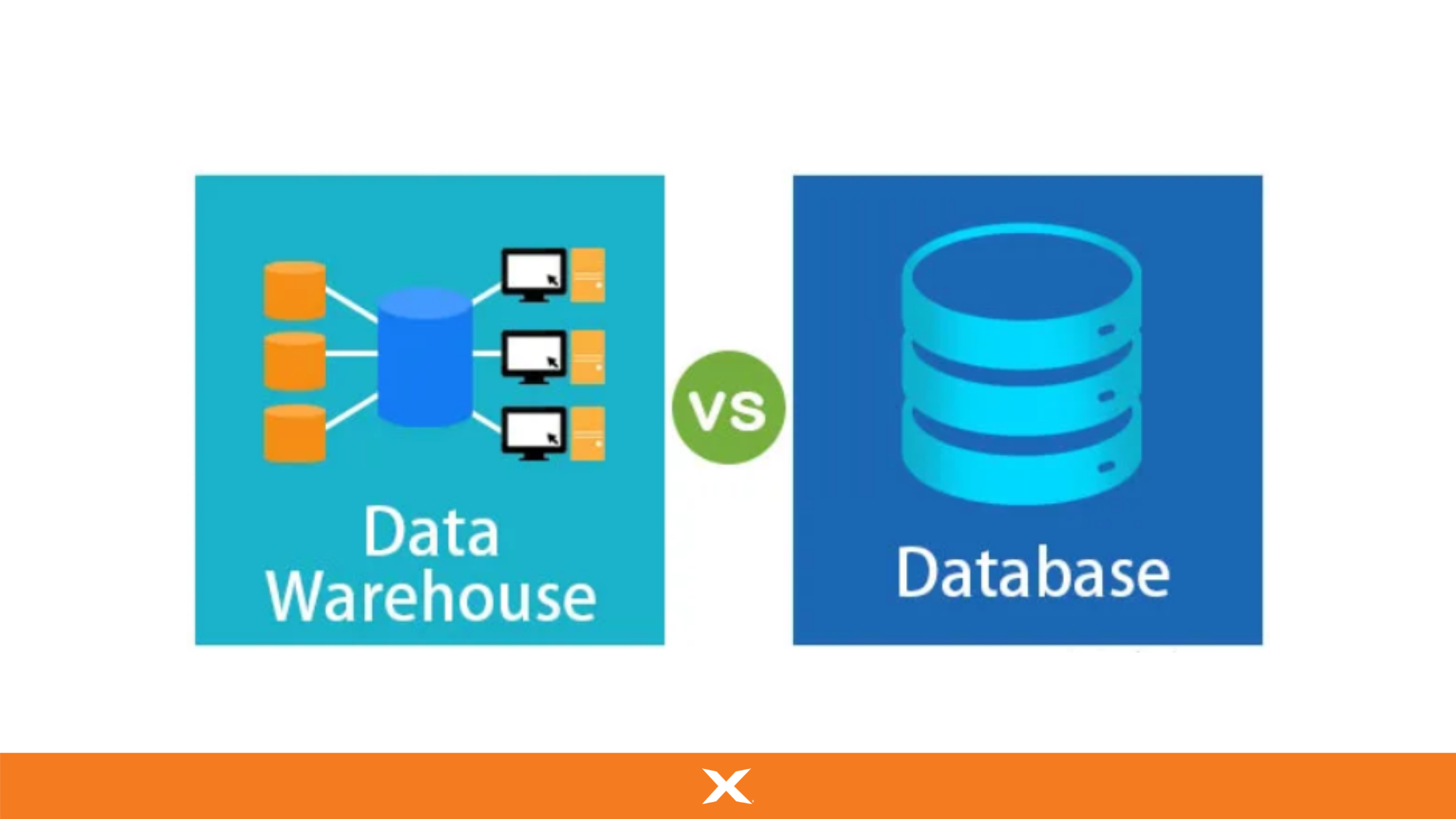
While data lakes and data warehouses are both important data management tools, they serve very different purposes. If you're trying to determine whether you need a data lake, a data warehouse, or possibly even both, you'll want to understand the functionality of each tool and their differences thoroughly. This article will highlight the differences between each tool, how they can be used together, and help you determine which one is right for your organization. We'll start with data lakes first, because data warehouses are typically built from data lakes.
What is a Data Lake?
Data lakes are data repositories that store data in its raw form. Data lakes emphasize data storage rather than data management, by allowing data to be stored in whatever format is most convenient at the time of storage. This allows for easier discovery and analysis of data due to fewer restrictions on how data needs to be formatted or structured before being loaded into the data lake. The data lake is often part of the data warehouse, but data lakes don't necessarily have to be integrated with a data warehouse. A data lake can hold data without any of it being cleansed or prepared for analysis, which is typically a tedious and time-consuming process — unless you use an automated data integration platform like Timextender.
Benefits of Using a Data Lake
There are several benefits to using data lakes:
- Data lakes are "free form" data stores, meaning data can be stored in nearly any format in its raw, unstructured form. It's easy to store data from sources that can't always produce data in a format that data warehouses require, such as data collected using IoT sensors.
- Because data can be stored in multiple formats, there isn't the same requirement for data cleansing and preparation like there would be to load data into a data warehouse.
- Data lakes are scalable, meaning they can accommodate growing data volumes over time. It is important, however, that such data still follows certain agreed upon standards like basic metadata tagging for future reference and ease of access when needed. Having data that is not properly tagged and organized can lead to the data lake becoming more of a "data swamp", making it difficult to conduct any form of meaningful data analysis.
What is a Data Warehouse?
Data warehouses are similar to data lakes in that they support storing data from multiple sources. In fact, data warehouses often combine data from multiple databases and data lakes. However, data warehouses are designed specifically for data analysis purposes, so data needs to be cleansed, formatted, and prepared before being loaded into the data warehouse where it can be queried or analyzed.
For example, IoT sensor readings may not include all the necessary formatting needed to work within a specific data warehouse view or table structure. However, this can easily be resolved by using an automated data preparation tool like Timextender, which automatically transforms unstructured sensor data into data that is highly structured for data warehousing purposes.
You can think of a data warehouse as a "clean" data store where data is carefully separated, cleansed, and structured, allowing you to quickly extract actionable insights. Data warehouses typically also provide data governance and data management capabilities, along with better security options.
Benefits of Using a Data Warehouse
There are several benefits to using data warehouses:
- Data warehouses are able to handle data from multiple sources, making it easier to consolidate data across different data silos.
- Data warehouses allow for more robust data analysis due to data being structured in a specific way.
- They offer data governance and data management, which ensures data quality while also improving data security.
- Data warehouses remove data redundancies, making the data more streamlined for analysis purposes. This leads to faster analytical processing speeds.
- Data sources within data warehouses typically follow a star schema data model.
Combining Data Lakes and Data Warehouses
While data lakes and data warehouses serve different purposes, there exists a way to combine the two in order to build a modern data infrastructure that is integrated, automated, and offers the best of both worlds. Instead of trying to manually move data from data lakes into data warehouses, some organizations choose to use data lakes as central repositories for their data warehouse. With this approach, data is stored in the data lake for ease of access. Then, that data can be cleansed, prepared, and transferred into a data warehouse. The data inside the data warehouse can then be used for data analysis purposes — for example, building data models, dashboards, and reports.
By using this hybrid approach — incorporating data warehouses alongside data lakes — users are able to take full advantage of both platforms' benefits, without having to rely on manual tasks that slow down analytics processes.
How Timextender Brings It Together
Building a modern data infrastructure that can turn rapidly growing amounts of raw data into actionable insights typically requires a team of highly skilled developers, a patchwork of slow manual tools, and months — or even years — of development time. Timextender removes these bottlenecks and empowers your organisation with access to the insights they need to accelerate innovation and growth.
Here's how Timextender consolidates data into a central data lake, cleanses it as needed, and transforms it into a format that can be used for analysis:
Data Ingestion
Timextender allows you to ingest data from a wide range of data sources into your data lake, while automatically adapting to any changes that may happen in your source systems. Having all of your data stored in a single format and location lays the foundation for any type of advanced analytics, including AI and machine learning.
Data Preparation
Once your data has been ingested, Timextender's intuitive interface allows you to quickly find the data you need and prepare it for analysis. The platform automatically cleanses, transforms, and consolidates data into a single version of truth, with full lineage and documentation generated automatically throughout the process.
Semantic Models
Now that your data is integrated, cleansed, and prepared for analysis, you can deliver a governed subset of data to business users using semantic models. This allows for fast creation and flexible modification of dashboards and reports. The semantic layer provides department or purpose-specific models of your data using terms and definitions that business users understand — similar to the traditional concept of data marts.
Because a single model is created once and then deployed to multiple front-end solutions, users get the same fields and figures regardless of whether they are using Power BI, Tableau, or Qlik. This means that, while the organisation may be using multiple visualisation tools, this does not need to increase the amount of work required to build or modify a model — and it ensures all users are consuming a single version of truth, regardless of the tool they use.
Conclusion
In the end, data lakes and data warehouses are both useful tools for data analytics efforts within an organisation, as long as they're evaluated and utilised according to their specific capabilities and functions. Timextender helps you get the best of both — combining automated ingestion, preparation, and semantic modelling into a single unified platform, so your team can spend less time moving data and more time using it.
Is your data ready for AI in production?
The AI-Ready Data whitepaper covers the five pillars of an AI-ready foundation — including a 10-question diagnostic to benchmark your own environment. Free to download.
→ Download the whitepaper